Buy fincas.eu ?
We are moving the project
fincas.eu .
Are you interested in purchasing the domain
fincas.eu ?
domain@kv-gmbh.de · 0541-91531010
Buy fincas.eu ?
Why do the elements of the periodic table have different properties?
The elements of the periodic table have different properties because of their unique atomic structure. Each element has a different number of protons, neutrons, and electrons, which determines its chemical and physical properties. The arrangement of electrons in the outermost energy level, or valence shell, is particularly important in determining an element's reactivity and ability to form chemical bonds. Additionally, the size and charge of the nucleus, as well as the distribution of electrons in different energy levels, also contribute to the variations in properties among the elements. **
What are the properties of elements and main groups in the periodic table?
The properties of elements in the periodic table are determined by their atomic structure, including the number of protons, neutrons, and electrons. Elements in the same main group share similar chemical properties due to their similar electron configurations. Main group elements are divided into groups 1, 2, and 13-18, and they tend to form ions with specific charges based on their position in the periodic table. Additionally, main group elements often exhibit predictable trends in properties such as atomic radius, ionization energy, and electronegativity as you move across a period or down a group in the periodic table. **

Similar search terms for Periodic
Top-Angebote
Products related to Periodic:
-
The Gray Barn Hallelujah Acres Window Curtain PanelLend a little something lovely to your home with this ruffled curtain panel. Your choice of light, gentle colors brings grace and splendor to your space, and the pom pom detail adds a dash of fun.43,49 $*Shipping: 0,00 $Secure redirect to the provider




-
What are the properties of the Boron group (Group 3) in the periodic table?
The Boron group, also known as Group 13, in the periodic table consists of the elements boron, aluminum, gallium, indium, and thallium. These elements have three valence electrons, making them reactive and able to form compounds with a variety of other elements. They are all metals, with the exception of boron, which is a metalloid. The group exhibits a trend of increasing metallic character and reactivity as you move down the group. Additionally, these elements have a tendency to form +3 oxidation states in their compounds. **
-
Which periodic table is better?
There is no definitive answer to which periodic table is better as both the Mendeleev periodic table and the modern periodic table have their own strengths and weaknesses. The Mendeleev periodic table is credited with predicting the properties of undiscovered elements and organizing elements based on their atomic mass. On the other hand, the modern periodic table arranges elements based on their atomic number, which reflects the number of protons in the nucleus. Ultimately, the choice of which periodic table is better depends on the context in which it is being used and personal preference. **
-
What is a periodic flow?
A periodic flow is a type of fluid motion where the velocity and other flow properties at any given point in the flow field vary in a regular and repeating manner over time. This means that the flow pattern at a specific location will repeat itself after a certain time interval. Periodic flows are commonly observed in many natural and engineered systems, such as ocean currents, wind patterns, and oscillating heat exchangers. Understanding periodic flows is important for predicting and analyzing the behavior of these systems. **
-
What is the periodic table?
The periodic table is a tabular arrangement of all known chemical elements, organized by their atomic number, electron configuration, and recurring chemical properties. It is a fundamental tool in chemistry that allows scientists to predict the behavior of elements and their compounds. The table is divided into rows called periods and columns called groups, with elements in the same group sharing similar characteristics. The periodic table is constantly updated as new elements are discovered and our understanding of chemistry evolves. **


Is every periodic sequence divergent?
No, not every periodic sequence is divergent. A periodic sequence is a sequence that repeats after a certain number of terms. If the terms in the sequence approach a specific value as the sequence continues, then the sequence is convergent. However, if the terms in the sequence do not approach a specific value and instead diverge, then the sequence is divergent. **
Is this a periodic process?
Yes, the process described is a periodic process. It involves a series of repeated steps or actions that occur at regular intervals. The process follows a predictable pattern and can be observed over time. This periodicity allows for the process to be analyzed, optimized, and potentially automated for efficiency. **
Top-Angebote
Products related to Periodic:
-
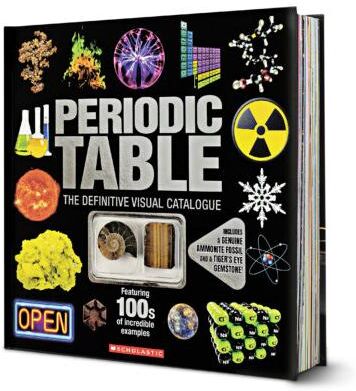
Scholastic Periodic Table w/Fossil & Ammonite GemLooking at the periodic table can be a bit daunting...how can you possibly remember what 118 different elements do? Featuring eye-popping photography and an enormous wealth of cool facts, this is the only book you'll need to help you learn about the...24,99 $*Shipping: 0,00 $Secure redirect to the provider
-
The Gray Barn Hallelujah Acres Window Curtain PanelLend a little something lovely to your home with this ruffled curtain panel. Your choice of light, gentle colors brings grace and splendor to your space, and the pom pom detail adds a dash of fun.43,49 $*Shipping: 0,00 $Secure redirect to the provider
-
Why do the elements of the periodic table have different properties?
The elements of the periodic table have different properties because of their unique atomic structure. Each element has a different number of protons, neutrons, and electrons, which determines its chemical and physical properties. The arrangement of electrons in the outermost energy level, or valence shell, is particularly important in determining an element's reactivity and ability to form chemical bonds. Additionally, the size and charge of the nucleus, as well as the distribution of electrons in different energy levels, also contribute to the variations in properties among the elements. **
-
What are the properties of elements and main groups in the periodic table?
The properties of elements in the periodic table are determined by their atomic structure, including the number of protons, neutrons, and electrons. Elements in the same main group share similar chemical properties due to their similar electron configurations. Main group elements are divided into groups 1, 2, and 13-18, and they tend to form ions with specific charges based on their position in the periodic table. Additionally, main group elements often exhibit predictable trends in properties such as atomic radius, ionization energy, and electronegativity as you move across a period or down a group in the periodic table. **
-
What are the properties of the Boron group (Group 3) in the periodic table?
The Boron group, also known as Group 13, in the periodic table consists of the elements boron, aluminum, gallium, indium, and thallium. These elements have three valence electrons, making them reactive and able to form compounds with a variety of other elements. They are all metals, with the exception of boron, which is a metalloid. The group exhibits a trend of increasing metallic character and reactivity as you move down the group. Additionally, these elements have a tendency to form +3 oxidation states in their compounds. **
-
Which periodic table is better?
There is no definitive answer to which periodic table is better as both the Mendeleev periodic table and the modern periodic table have their own strengths and weaknesses. The Mendeleev periodic table is credited with predicting the properties of undiscovered elements and organizing elements based on their atomic mass. On the other hand, the modern periodic table arranges elements based on their atomic number, which reflects the number of protons in the nucleus. Ultimately, the choice of which periodic table is better depends on the context in which it is being used and personal preference. **
Similar search terms for Periodic
-
What is a periodic flow?
A periodic flow is a type of fluid motion where the velocity and other flow properties at any given point in the flow field vary in a regular and repeating manner over time. This means that the flow pattern at a specific location will repeat itself after a certain time interval. Periodic flows are commonly observed in many natural and engineered systems, such as ocean currents, wind patterns, and oscillating heat exchangers. Understanding periodic flows is important for predicting and analyzing the behavior of these systems. **
-
What is the periodic table?
The periodic table is a tabular arrangement of all known chemical elements, organized by their atomic number, electron configuration, and recurring chemical properties. It is a fundamental tool in chemistry that allows scientists to predict the behavior of elements and their compounds. The table is divided into rows called periods and columns called groups, with elements in the same group sharing similar characteristics. The periodic table is constantly updated as new elements are discovered and our understanding of chemistry evolves. **
-
Is every periodic sequence divergent?
No, not every periodic sequence is divergent. A periodic sequence is a sequence that repeats after a certain number of terms. If the terms in the sequence approach a specific value as the sequence continues, then the sequence is convergent. However, if the terms in the sequence do not approach a specific value and instead diverge, then the sequence is divergent. **
-
Is this a periodic process?
Yes, the process described is a periodic process. It involves a series of repeated steps or actions that occur at regular intervals. The process follows a predictable pattern and can be observed over time. This periodicity allows for the process to be analyzed, optimized, and potentially automated for efficiency. **
* All prices are inclusive of VAT and, if applicable, plus shipping costs. The offer information is based on the details provided by the respective shop and is updated through automated processes. Real-time updates do not occur, so deviations can occur in individual cases. ** Note: Parts of this content were created by AI.