Buy fincas.eu ?
We are moving the project
fincas.eu .
Are you interested in purchasing the domain
fincas.eu ?
domain@kv-gmbh.de · 0541-91531010
Buy fincas.eu ?
What are the properties of the Boron group (Group 3) in the periodic table?
The Boron group, also known as Group 13, in the periodic table consists of the elements boron, aluminum, gallium, indium, and thallium. These elements have three valence electrons, making them reactive and able to form compounds with a variety of other elements. They are all metals, with the exception of boron, which is a metalloid. The group exhibits a trend of increasing metallic character and reactivity as you move down the group. Additionally, these elements have a tendency to form +3 oxidation states in their compounds. **
Is the octet rule invalid for boron?
The octet rule states that atoms tend to gain, lose, or share electrons in order to have a full outer shell of eight electrons. Boron, however, is an exception to the octet rule because it only has three electrons in its outer shell. This means that boron tends to form compounds where it has fewer than eight electrons in its outer shell, such as in BF3 where boron forms three bonds with fluorine. Therefore, the octet rule is not valid for boron. **


Similar search terms for Boron
Top-Angebote
Products related to Boron:
-
Uplifted Finds Retro Wooden Campervan 3D Car Puzzle DIY Model For Children ocean VillasBring play and creativity together with this retrostyle wooden campervan 3D puzzle. Designed as a European camper bus, this model is crafted for creative assembly and displaymaking it a perfect gift for young builders and fans of classic design. Key...75,97 $*Shipping: 0,00 $Secure redirect to the provider
-
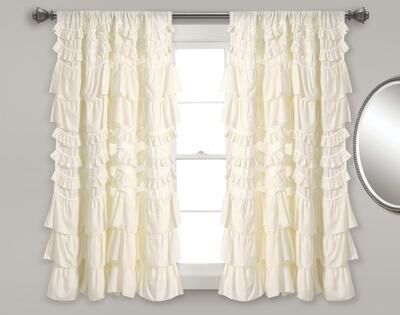
The Gray Barn Hallelujah Acres Window Curtain PanelLend a little something lovely to your home with this ruffled curtain panel. Your choice of light, gentle colors brings grace and splendor to your space, and the pom pom detail adds a dash of fun.43,49 $*Shipping: 0,00 $Secure redirect to the provider



-
What is the reaction equation for neon and boron?
The reaction equation for neon and boron is: 2Ne + 3B -> 2NeB3 In this reaction, two atoms of neon react with three atoms of boron to form two molecules of boron trineonide. **
-
What is the reaction equation between boron and carbon?
The reaction equation between boron and carbon is as follows: 2B + 3C → B4C + 2C This equation represents the reaction between boron and carbon to form boron carbide (B4C) and excess carbon. Boron carbide is a hard and abrasive material with high melting point, making it useful in various industrial applications such as in the production of ceramic materials and as an abrasive in cutting tools. **
-
Which ions can be formed from the atom Boron?
Boron can form ions with a charge of +3. This means it can lose three electrons to form the boron ion, B3+. This is because boron has three valence electrons in its outer shell, and it can lose these electrons to achieve a full octet and become more stable. Therefore, the only ion that can be formed from the atom Boron is the B3+ ion. **
-
Why do boron and carbon have no ion charge?
Boron and carbon have no ion charge because they both have a full outer electron shell with no need to gain or lose electrons to achieve stability. Boron has 3 electrons in its outer shell, while carbon has 4. Both elements can achieve stability by sharing electrons with other atoms through covalent bonding, rather than forming ions. This allows them to achieve a stable electron configuration without gaining or losing electrons. **


How do you calculate the binding energy of boron?
The binding energy of boron can be calculated using the mass defect and the mass-energy equivalence principle. First, the mass defect is calculated by subtracting the total mass of the individual protons and neutrons in the boron nucleus from the actual mass of the boron nucleus. Then, using Einstein's mass-energy equivalence principle (E=mc^2), the mass defect is multiplied by the speed of light squared to obtain the binding energy of the boron nucleus. This binding energy represents the amount of energy required to completely separate the protons and neutrons in the boron nucleus. **
Why is nitric acid added in the flame test for boron?
Nitric acid is added in the flame test for boron to convert the boron compound into a more volatile form, such as boric acid, which can be easily vaporized in the flame. This helps to enhance the visibility of the boron flame color, which is usually a greenish-blue. Additionally, the nitric acid also helps to remove any impurities or contaminants that may interfere with the flame test results, ensuring a more accurate observation of the boron flame color. **
Top-Angebote
Products related to Boron:
-
Missha Chogongjin Geum Sul Emulsion Deep Nourishing Properties 150mLA cleansing product for wrinkles and signs of ageing. Provides deep hydration and nourishment for dry and very dry skin. Restores skin’s natural moisture and oil balance, suitable for oily and combination skin. Reduces the appearance of fine lines, wrinkles, and loss of elasticity. Calms and soothes irritated or tired skin, promoting a healthier complexion.20,58 £*Shipping: 7,11 £Secure redirect to the provider
-
Uplifted Finds Retro Wooden Campervan 3D Car Puzzle DIY Model For Children ocean VillasBring play and creativity together with this retrostyle wooden campervan 3D puzzle. Designed as a European camper bus, this model is crafted for creative assembly and displaymaking it a perfect gift for young builders and fans of classic design. Key...75,97 $*Shipping: 0,00 $Secure redirect to the provider
-
The Gray Barn Hallelujah Acres Window Curtain PanelLend a little something lovely to your home with this ruffled curtain panel. Your choice of light, gentle colors brings grace and splendor to your space, and the pom pom detail adds a dash of fun.43,49 $*Shipping: 0,00 $Secure redirect to the provider
-
What are the properties of the Boron group (Group 3) in the periodic table?
The Boron group, also known as Group 13, in the periodic table consists of the elements boron, aluminum, gallium, indium, and thallium. These elements have three valence electrons, making them reactive and able to form compounds with a variety of other elements. They are all metals, with the exception of boron, which is a metalloid. The group exhibits a trend of increasing metallic character and reactivity as you move down the group. Additionally, these elements have a tendency to form +3 oxidation states in their compounds. **
-
Is the octet rule invalid for boron?
The octet rule states that atoms tend to gain, lose, or share electrons in order to have a full outer shell of eight electrons. Boron, however, is an exception to the octet rule because it only has three electrons in its outer shell. This means that boron tends to form compounds where it has fewer than eight electrons in its outer shell, such as in BF3 where boron forms three bonds with fluorine. Therefore, the octet rule is not valid for boron. **
-
What is the reaction equation for neon and boron?
The reaction equation for neon and boron is: 2Ne + 3B -> 2NeB3 In this reaction, two atoms of neon react with three atoms of boron to form two molecules of boron trineonide. **
-
What is the reaction equation between boron and carbon?
The reaction equation between boron and carbon is as follows: 2B + 3C → B4C + 2C This equation represents the reaction between boron and carbon to form boron carbide (B4C) and excess carbon. Boron carbide is a hard and abrasive material with high melting point, making it useful in various industrial applications such as in the production of ceramic materials and as an abrasive in cutting tools. **
Similar search terms for Boron
-
Which ions can be formed from the atom Boron?
Boron can form ions with a charge of +3. This means it can lose three electrons to form the boron ion, B3+. This is because boron has three valence electrons in its outer shell, and it can lose these electrons to achieve a full octet and become more stable. Therefore, the only ion that can be formed from the atom Boron is the B3+ ion. **
-
Why do boron and carbon have no ion charge?
Boron and carbon have no ion charge because they both have a full outer electron shell with no need to gain or lose electrons to achieve stability. Boron has 3 electrons in its outer shell, while carbon has 4. Both elements can achieve stability by sharing electrons with other atoms through covalent bonding, rather than forming ions. This allows them to achieve a stable electron configuration without gaining or losing electrons. **
-
How do you calculate the binding energy of boron?
The binding energy of boron can be calculated using the mass defect and the mass-energy equivalence principle. First, the mass defect is calculated by subtracting the total mass of the individual protons and neutrons in the boron nucleus from the actual mass of the boron nucleus. Then, using Einstein's mass-energy equivalence principle (E=mc^2), the mass defect is multiplied by the speed of light squared to obtain the binding energy of the boron nucleus. This binding energy represents the amount of energy required to completely separate the protons and neutrons in the boron nucleus. **
-
Why is nitric acid added in the flame test for boron?
Nitric acid is added in the flame test for boron to convert the boron compound into a more volatile form, such as boric acid, which can be easily vaporized in the flame. This helps to enhance the visibility of the boron flame color, which is usually a greenish-blue. Additionally, the nitric acid also helps to remove any impurities or contaminants that may interfere with the flame test results, ensuring a more accurate observation of the boron flame color. **
* All prices are inclusive of VAT and, if applicable, plus shipping costs. The offer information is based on the details provided by the respective shop and is updated through automated processes. Real-time updates do not occur, so deviations can occur in individual cases. ** Note: Parts of this content were created by AI.